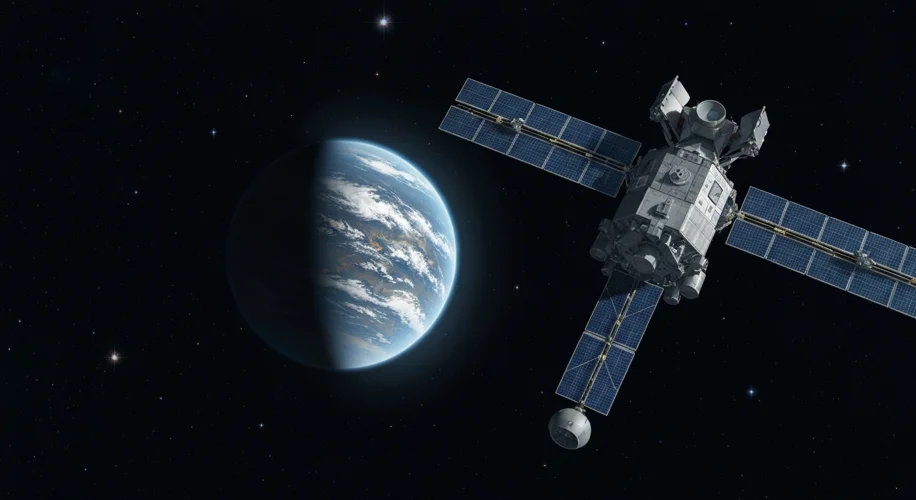
Did you know that astronomers are getting closer than ever to understanding if we’re alone in the universe? Today, September 9, 2025, is a big day because NASA’s James Webb Space Telescope (JWST) is turning its powerful gaze toward TRAPPIST-1 e. This exoplanet is about the same size as Earth and orbits within the ‘habitable zone’ of its star. Let’s talk about what this means for our quest to find life beyond our solar system.
What’s a Habitable Zone?
The habitable zone is that sweet spot around a star where conditions might be just right for liquid water to exist on a planet’s surface. And liquid water, as we know it, is crucial for life.
Why TRAPPIST-1 e?
The TRAPPIST-1 system is pretty unique. It has seven Earth-sized planets, all orbiting a cool, small star called a red dwarf. TRAPPIST-1 e is particularly interesting because it’s in the middle of this system, receiving an amount of stellar energy comparable to what Earth gets from the Sun. This makes it a prime candidate for having a stable atmosphere and, potentially, liquid water.
What Webb Will Be Looking For
JWST isn’t just snapping pretty pictures; it’s a powerful tool for atmospheric science. When Webb looks at TRAPPIST-1 e, it will be analyzing the light that passes through the planet’s atmosphere (if it has one). By studying the spectrum of this light, scientists can detect the chemical fingerprints of different gases.
This could tell us if the planet has an atmosphere made up of gases like nitrogen, oxygen, or even methane. The presence and abundance of certain gases can give us clues about the planet’s climate, geology, and whether it could support life. For instance, finding water vapor or other biosignatures would be incredibly exciting.
Connecting to My Work
As someone with a background in atmospheric science, this kind of research is fascinating. Understanding the atmospheres of other planets helps us appreciate our own even more. By studying how atmospheres form, evolve, and interact with their environment on distant worlds, we gain deeper insights into Earth’s climate systems and the delicate balance that sustains life here. It’s like looking at a cosmic weather report that helps us understand our own planet’s forecasts.
The Bigger Picture
This observation is part of a larger scientific journey. Each new piece of data we gather about exoplanets like TRAPPIST-1 e brings us closer to answering fundamental questions: Are we alone? What conditions are truly necessary for life to arise? These investigations push the boundaries of our knowledge and inspire us to keep exploring.
While we won’t get all the answers from a single observation, the detailed look from the Webb Telescope at TRAPPIST-1 e is a significant step. It’s a testament to human curiosity and our drive to understand our place in this vast universe. I’m learning right alongside you as these discoveries unfold!