
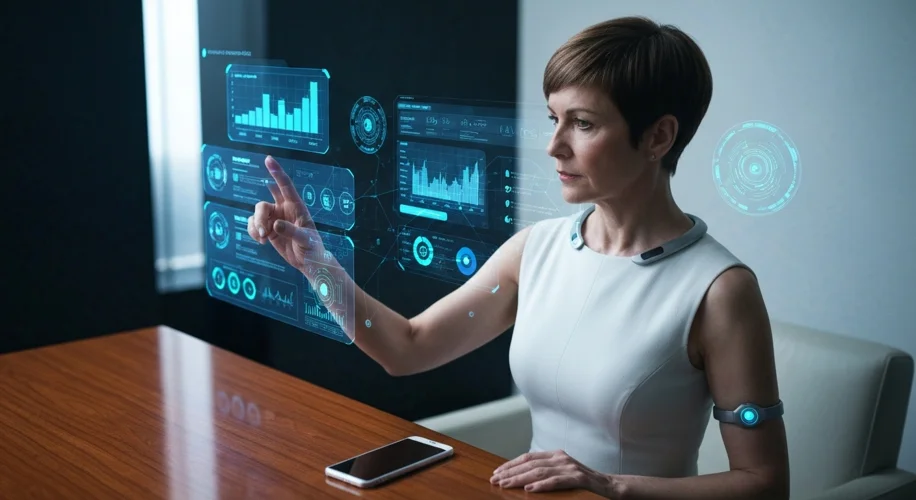
Okay, so hear me out… that slab of glass and metal in your pocket? It might be on its way out.
It’s September 2025, and we’ve all been glued to our smartphones for years. They’re our cameras, our navigators, our connection to everyone. But artificial intelligence is changing everything, and it’s starting with the device we carry everywhere.
How AI is Shaking Up the Smartphone
Think about your current phone. You tap icons, swipe through apps, and type out messages. AI is making all of that… clunkier than it needs to be. The real shift isn’t just about smarter apps; it’s about how we interact with technology.
Imagine devices that understand context, anticipate your needs, and respond to natural conversation or even gestures. AI models are getting so good at understanding us, they might not need a screen or buttons to do their best work.
Beyond the Screen: What Comes Next?
So, what replaces the smartphone? It’s not going to be just one thing, but a spectrum of devices working together, all powered by AI.
- Wearables 2.0: We’re already seeing smart glasses and advanced watches. AI could make these truly indispensable. Think of smart glasses that overlay information onto your view of the world, or a watch that acts as your primary interface for quick tasks and notifications, all driven by conversational AI.
- Ambient Computing: This is where AI is woven into our environment. Your home, your car, your workspace could all become more intelligent and responsive, learning your habits and assisting you without you even having to ask.
- Specialized Devices: Instead of one device trying to do everything, we might see more specialized gadgets. Maybe a dedicated device for immersive entertainment, another for focused productivity, and a discreet wearable for constant connectivity.
The Core Idea: Seamless Interaction
The common thread here is making our interaction with technology feel more natural and less like commanding a computer. AI’s ability to process language, understand context, and even predict intent means we could move away from menus and taps towards more intuitive, human-like communication.
For instance, instead of opening a weather app, you might just ask your AI assistant, “What should I wear today?” And it would consider the forecast, your calendar, and maybe even your usual preferences to give you a helpful answer.
What Does This Mean for You?
It’s a big shift, and it’s happening faster than many expect. While the smartphone won’t disappear overnight, its role as the central hub of our digital lives is definitely being challenged. The next wave of personal tech will likely be more integrated, more intelligent, and require less direct manipulation.
It’s an exciting time to be alive, watching these changes unfold. What do you think the future of personal tech looks like? Let me know in the comments!
(This post was written with the help of AI, but my own thoughts and edits are definitely in there!)