
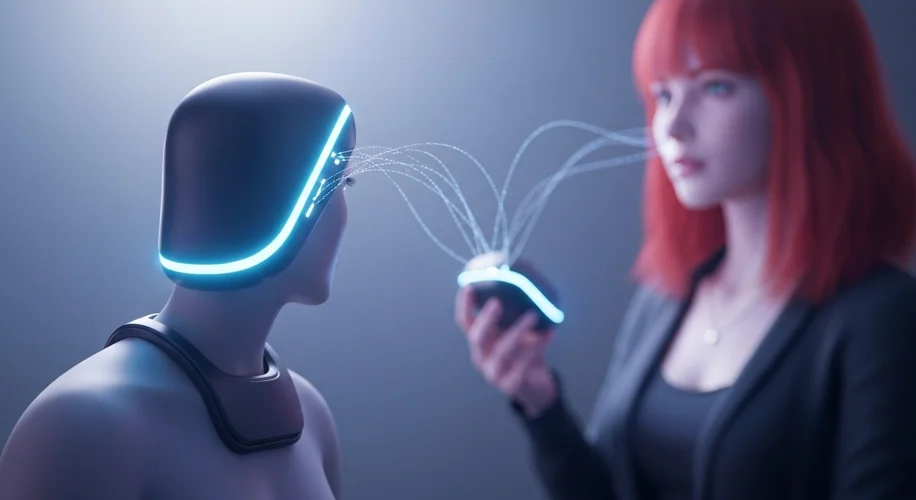
Imagine a world where you could share thoughts, ideas, and even emotions without uttering a single word or typing a key. It sounds like science fiction, but emerging technologies are bringing this possibility closer to reality.
Projects like ‘Alterego’ are exploring what we might call ‘near-telepathic’ communication. These aren’t mind-reading devices in the dramatic sense, but rather sophisticated wearables designed to interpret subtle physiological cues and even brain activity to facilitate silent, instantaneous communication. The goal is to bypass the slower, more deliberate methods we currently use, allowing for communication at the speed of thought.
From my perspective, having spent decades in the software industry, this represents a profound shift in how we might interact. Think about the potential benefits: imagine surgeons coordinating silently during complex operations, athletes relaying strategies without giving away their plans, or individuals with speech impediments communicating with newfound ease and speed. The possibilities for enhanced collaboration and understanding are vast.
However, as with any powerful new technology, we must ask ourselves about the ethical implications and social changes. When technology becomes this intimate, blurring the lines between our internal thoughts and external expression, what are the safeguards? How do we ensure privacy and prevent misuse?
Consider the concept of consent. If communication can happen so seamlessly, how do we maintain control over what we share? What if subtle, involuntary signals are misinterpreted? We need to consider the potential for unintended consequences, the erosion of personal boundaries, and the societal shifts that might arise from such direct, unmediated interaction.
It’s crucial to consider how these tools could alter social dynamics. Will the nuances of body language and spoken tone, which often convey so much meaning, be lost or undervalued? Could this lead to a more efficient, but perhaps less empathetic, form of communication? The key question is how we can develop and integrate these technologies in a way that augments human connection rather than diminishing it.
The future of human communication might be moving towards a more direct, almost intuitive interface. As these technologies develop, it’s essential that we engage in thoughtful discussion about their potential, their risks, and the kind of future we want to build with them. The path forward requires a balanced approach, embracing innovation while prioritizing human well-being and ethical development.