
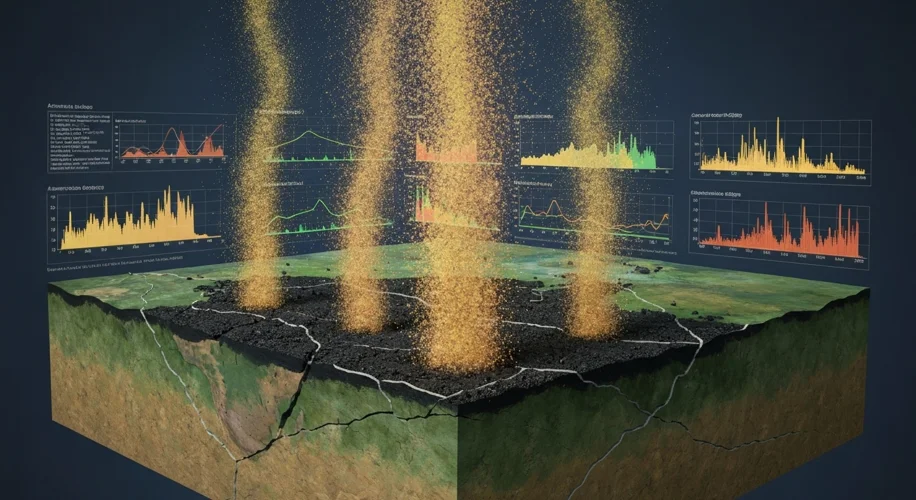
It’s August 8th, 2025, and a recent discovery is making waves in the climate science community.
Scientists have found that ancient carbon, locked away for millennia, is now making its way into our atmosphere. This isn’t just another climate headline; it’s a development that could mean our climate challenges are even more complex than we thought.
What is Ancient Carbon?
Think of carbon that’s been stored deep underground for millions of years. This includes things like coal, oil, and natural gas, but also organic matter trapped in permafrost or deep ocean sediments. For a very long time, this carbon was safely out of the active carbon cycle that affects our daily weather and climate.
How is it Leaking?
The process is complex, but essentially, natural geological and biological processes, accelerated by human activity, are disturbing these ancient carbon reservoirs. For example, as the planet warms, permafrost thaws, releasing gases like methane and carbon dioxide that were trapped within. Also, shifts in ocean currents or changes in land use can expose ancient carbon deposits.
Why is this a Bigger Threat?
When we talk about climate change, we often focus on the carbon we’ve released from burning fossil fuels in the last century or so. However, this ancient carbon represents a much larger, pre-existing pool. If significant amounts of this ancient carbon are released, it could amplify the warming effect we’re already experiencing.
It’s like finding out there’s another, larger gas tank connected to your car that you didn’t know about, and it’s starting to leak. It adds a new layer of complexity to our efforts to understand and manage the climate.
What Does This Mean for Us?
This discovery highlights the interconnectedness of Earth’s systems and how human actions can have far-reaching, sometimes unforeseen, consequences. It underscores the urgency of reducing our current emissions, as any additional warming can further destabilize these ancient carbon stores.
As someone who studies climate modeling, I find this particularly fascinating and concerning. It means our models need to account for these newly identified sources, refining our predictions and our strategies for mitigation. It’s a reminder that the Earth’s systems are dynamic and that we’re still learning a great deal about how they interact.
This isn’t about assigning blame; it’s about understanding the science and making informed decisions. The more we know about where carbon is coming from and how it’s entering the atmosphere, the better equipped we are to address the climate crisis.