
Living in an older home has its charms, but sometimes, those charms come with a side of moisture. If you’ve dealt with water damage in your bathroom, especially with older homes that might not have the best ventilation, you know the headache that follows. Replacing that soggy drywall isn’t just about patching a hole; it’s about preventing future problems.
Why Bathroom Drywall is Different
Bathrooms are prime real estate for moisture. Showers, sinks, and even just everyday humidity can take a toll. When water damage occurs, the standard paper-faced drywall can become a breeding ground for mold and degrade quickly. Simply replacing it with the same old material, especially if your ventilation is lacking, is like putting a band-aid on a bigger issue.
Choosing the Right Materials: Your Moisture-Resistant Arsenal
So, what’s the best way to rebuild after water damage? We need materials that can stand up to the unique challenges of a bathroom environment.
- Cement Board: Often called backer board, cement board is a fantastic choice for areas that get consistently wet, like around showers and tubs. It’s made from cement and reinforcing fibers, making it inherently resistant to moisture and mold. It provides a solid, stable base for tiles or other finishes.
- Mold-Resistant Drywall (Green Board): This is a step up from standard drywall. It has a special paper facing that resists moisture and mold growth better than regular drywall. It’s a good option for walls that might occasionally get splashed or experience higher humidity, but aren’t constantly saturated. Sometimes it’s called “green board” because the paper is often green.
- Paperless Drywall: Another excellent option is drywall with a fiberglass mesh facing instead of paper. This material is also highly resistant to moisture and mold, offering great durability.
Tapes and Muds: The Unsung Heroes
When you’re repairing drywall, the tape and joint compound (mud) you use are just as important as the board itself, especially in a bathroom.
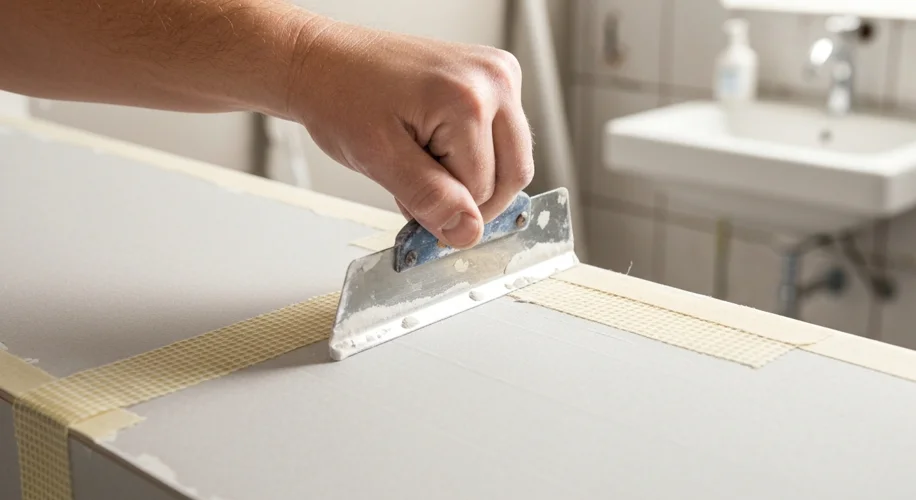
- Fiberglass Mesh Tape: Unlike paper tape, fiberglass mesh tape is sticky and self-adhering. More importantly for bathrooms, it’s resistant to moisture and won’t degrade if it gets damp. It’s also known for its strength.
- All-Purpose Joint Compound vs. Lightweight or Setting-Type: For bathrooms, a good quality all-purpose joint compound can work, but many pros prefer a setting-type compound (often a powder you mix with water). These compounds harden chemically, making them harder and more resistant to moisture once cured. They also tend to shrink less than air-drying all-purpose compounds, which can be helpful for creating a smooth finish.
The Process: A Step-by-Step Approach
- Identify and Fix the Source: Before you do anything else, make sure the water leak or source of the dampness is completely fixed. This is the most crucial step.
- Remove Damaged Drywall: Cut out the water-damaged drywall cleanly. Go past the visible damage to ensure you’re removing any material that’s compromised or might harbor mold.
- Prepare the Area: Ensure the studs are dry and free of mold. You might want to treat them with a mold inhibitor.
- Install New Material: Cut your chosen moisture-resistant board (cement board or mold-resistant drywall) to fit the opening. Secure it to the studs using the appropriate screws.
- Tape and Mud: Apply fiberglass mesh tape over the seams. Then, apply thin coats of your chosen joint compound, feathering the edges to blend into the surrounding wall. Allow each coat to dry completely and lightly sand between coats.
- Finish and Paint: Once you have a smooth, seamless finish, you’re ready to prime and paint with a bathroom-specific paint designed to resist mildew.
Addressing drywall damage in a bathroom, especially with an older home’s ventilation, is all about choosing the right materials and ensuring a solid repair. By opting for moisture-resistant products and properly sealing your work, you can create a durable, long-lasting fix that keeps your bathroom healthy and looking great.