
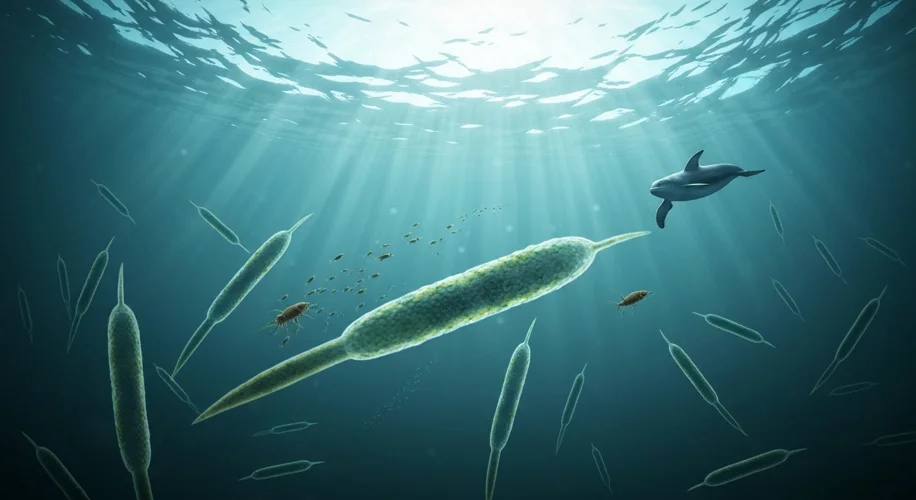
Did you know that some of the most important organisms on Earth are also some of the smallest? I’m talking about phytoplankton, specifically a type called Prochlorococcus. These microscopic powerhouses are basically the unsung heroes of our oceans, and a recent AP News report highlighted just how vulnerable they are to our warming seas.
Meet the Ocean’s Tiny Powerhouse
Prochlorococcus is a type of marine cyanobacteria, which is a fancy way of saying it’s a tiny, single-celled organism that uses sunlight to make its own food. It’s a form of phytoplankton, and these are the tiny plants that form the base of almost all marine food webs. Think of them as the tiny trees in a vast forest, providing the essential energy that eventually feeds everything from tiny zooplankton to the largest whales.
What makes Prochlorococcus so special? It’s incredibly abundant, found in oceans all around the world. Scientists estimate that these little guys are responsible for about 10% of all the oxygen we breathe. Yes, you read that right – 10% of the air you’re taking in right now might have been produced by these microscopic ocean dwellers!
Warming Waters Pose a Serious Risk
The problem, as the AP News study points out, is that our oceans are getting warmer. This isn’t just about making the water feel nicer for a swim; it has profound effects on the delicate ecosystems within.
Prochlorococcus thrives in specific temperature ranges. When the water gets too warm, their ability to survive and reproduce is compromised. The study found that warmer ocean temperatures can disrupt their cellular processes, making them less efficient at making food and, consequently, less able to support the marine life that depends on them.
This is a big deal because if Prochlorococcus populations decline, it has a ripple effect throughout the entire marine food web. Less food at the base means less food for everything else up the chain. This could lead to reduced populations of fish, marine mammals, and seabirds, impacting not just the health of our oceans but also the livelihoods of communities that depend on them.
Why This Matters to Us
It’s easy to think of ocean health as separate from our own, but it’s all connected. The oxygen Prochlorococcus produces, the food web it supports, and the role of oceans in regulating our climate are all vital to human well-being. Understanding that these tiny organisms are so crucial helps us appreciate the far-reaching impacts of climate change.
This study is a stark reminder that even the smallest elements of nature play a monumental role. Protecting our oceans means protecting these tiny, vital stars that power so much of life on Earth.