
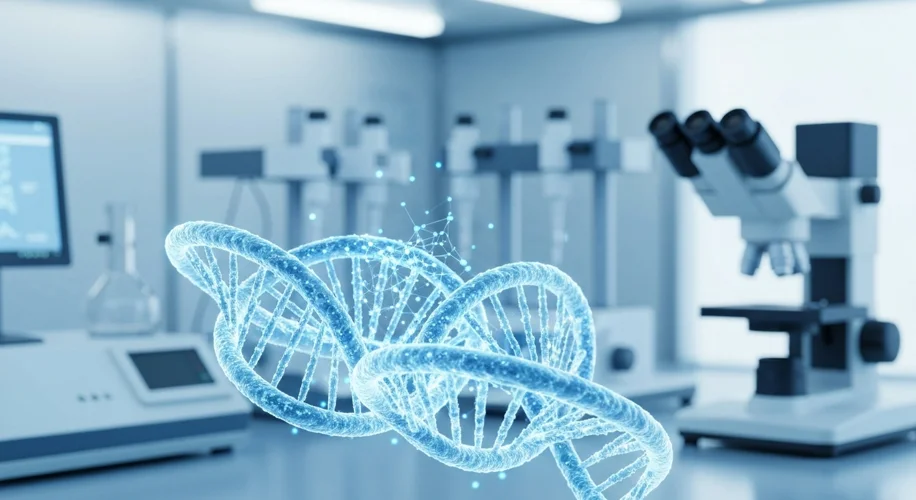
CRISPR Gets a Supercharge: Scientists Triple Its Editing Power
Today, September 9, 2025, marks a significant leap forward in the world of genetic engineering. Scientists have announced a breakthrough that makes CRISPR gene editing three times more effective, all thanks to a clever new nanostructure.
For years, CRISPR-Cas9 has been hailed as a revolutionary tool, allowing scientists to make precise changes to DNA. Think of it like a molecular scissor that can cut and edit specific parts of our genetic code. However, like any cutting-edge technology, it’s had its limitations. Sometimes it wasn’t efficient enough, and there were also concerns about making unintended edits, which can be a real worry when we’re talking about something as fundamental as our DNA.
What’s New? A Nanostructure Innovation
The latest advancement involves a specially designed nanostructure. This isn’t just a minor tweak; it’s a fundamental redesign of how the CRISPR system operates. This new structure acts as a guide and a stabilizer for the CRISPR machinery. Imagine it as a more sophisticated delivery system and a more precise targeting mechanism all rolled into one.
By packaging the CRISPR components within this nanostructure, scientists have achieved several key improvements:
- Increased Efficiency: The nanostructure helps deliver the CRISPR components more effectively to the target DNA. This means the system can make edits with greater success, reportedly three times more often than previous methods.
- Enhanced Safety: A major hurdle in gene editing has been ensuring that edits are made only where intended, avoiding off-target effects. This new nanostructure significantly reduces the chances of unintended edits, making the process much safer and more reliable.
- Faster Editing: Not only is it more effective, but the process is also faster. This acceleration is crucial for research, as it allows scientists to conduct experiments and gather data more quickly.
Why Does This Matter?
This boost in CRISPR’s effectiveness and safety has profound implications. It could accelerate research into treating genetic diseases, developing new therapies, and even advancing our understanding of fundamental biology. For conditions where precise genetic correction is needed, this advancement brings us closer to effective solutions.
It’s exciting to see how scientific innovation continues to refine powerful tools like CRISPR, making them more accessible, reliable, and impactful. This development is a testament to the ongoing progress in biotechnology and its potential to shape our future.